Tuesday, March 20, 2018

Barking up the wrong tree (Eric Barker)
Barking Up the Wrong Tree: The Surprising Science Behind Why Everything You Know About Success Is (Mostly) Wrong by [Barker, Eric]

Former blogger tries to write a detailed treatise on how conventional traits of success e.g. good grades are actually impediments for "success" in real life. Good subject to do a deep dive, however the storytelling is below par. Perhaps the transition from a blogger to an author is an arduous one. :) Lost my way after 100 pages, life is too short to spend on books which dont hold the interest.
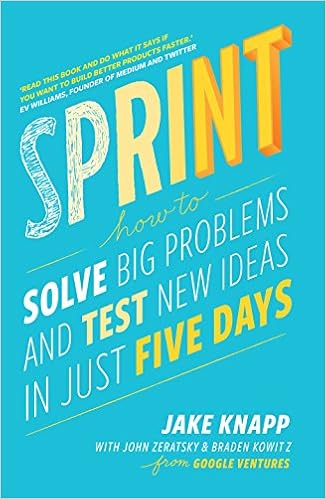
Sprint (Jake KnappJohn Zeratsky,‎ Braden Kowitz)


It is a Google version of Design Thinking. Replete with real word examples - both that worked and the ones that didnt. Very useful resource for new product launches, projects with ambiguous requirements etc.Also has a handy checklist - reference material for future. Finished this in 4 hours! Recommended. Albeit for folks in Tech, Media, New Product strategy.
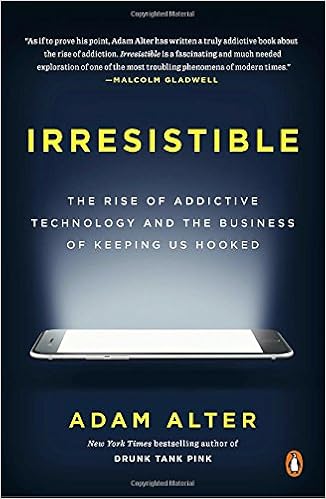
Irresistible (Adam Alter)


Unputdownable to say the least. Explains the horrors of screen addiction, with lucid details crystallized from top research on this subject. Governments, Families are taking a nap while this consumes us - especially the digital native generation. A must read.

Friday, January 29, 2016

Smoke gets in your eyes (by Caitlin Doughty)

A quirky and a zippy ride into a topic that is either brushed aside or comes with oodles of melancholy -death, or more accurately the aftermath. A story that had to be told in a macabre and yet funny fashion that author has chosen here. Not for the faint-hearted though. Author, a millennial working in a crematorium, is able to hold attention for 240+ pages while she details out 3 planks of her story. Her own saga as a modern age undertaker, bizzare and yet purposeful walk through burial traditions and a shocking peak into the future of death industry. Loved it.

PS - read this book my mother's death anniversary, 26th Jan. 

Saturday, January 23, 2016

Machievalli - A Portrait (Christopher S Celenza)


Long live Battery Park NYPL. Came across this  mushy ode to medieval Florence, Machiavelli’s hometown was the epicenter of the Italian Renaissance in the fifteenth century, a place of unparalleled artistic and intellectual attainments. But it was also riven by extraordinary violence. War and public executions were commonplace—the protagonist himself was imprisoned and brutally tortured at the behest of his own government. These experiences left a deep impression on this keen observer of power politics, whose two masterpieces—The Prince and The Discourses—draw everywhere on the hard-won wisdom gained from navigating a treacherous world. Worth a read during a macabre winter storm!

Tuesday, January 19, 2016

Internal Medicine (Terrence Holt)


Picked this up at EWR. Bad decision, lacked any structure or coherence. Was attracted to the subject - a resident doctor using a thinly veiled layer of fiction to bring some real life stories is a good idea. But in the end, it is patchy and doesn't deliver at all. Life is too short to waste on bad books, left it after first 50 pages. Onto next one.
 

The Checklist Manifesto (Atul Gawande)


Continuing with medicine/healthcare theme, picked this up at Mid Manhattan branch of NYPL. One piece of honest advice, visit this branch after taking a flu shot and buying a good pair of surgical gloves.  Battery Park branch in lower Manhattan is a better choice. Back to the book - simple advice with multiple anecdotes showing how keeping a checklist saved lives. Author keeps you interested, centered on the basic idea through the book. Easy read, took couple of hours and plethora of examples from several industries. A good find.


Saturday, January 02, 2016

Being Mortal (Atul Gawande)


Finished this on the flight from Bangalore to Delhi, 200 pages poof, gone in 3 hours. If you liked Siddhartha Mukherjee's book on cancer (Emperor of Maladies), you will love this one as well. An absolute gem - turns a dark subject of terminal illness into a page turner. Fascinating to see a doctor talk about his nemesis - death with such finesse and practicality. Author offers a middle path - one between an aggressive treatments and "assisted suicide" for dealing with terminal disease. And most importantly a lesson on the finitude of  our lives. 

Saturday, December 05, 2015

George Washington's Secret Six: The Spy Ring That Saved the American Revolution


Bought along with book on Jefferson by the same author. Stories on spy rings and their deeds lag the glory that is bestowed upon political and military leaders. And often with a lag, comes lack of details that make up the stories. Thankfully this is a well researched account of a nascent group that played its due part in American War for Independence. The storytelling too is pretty tight, read this in 2-3 installments.

Thomas Jefferson and the Tripoli Pirates: The Forgotten War That Changed American History


Often when we reflect on the past, there are moments that come to our mind - defining ones that literally shape a part of our lives. An academic achievement that led us to a new path, a meeting that gave confidence for us to make a career change. Same applies to a nation. And then it all falls in perfect order. 

Book talks about how skirmishes and military standoffs with North African militia in early part of US national history helped a nation still in infancy to assume a role far greater than its weight at that time and provided seeds of confidence and power projection unseen even in more established regimes. A bit over the top though, generalized descriptions of the "enemy" spoil a perfect theme to reminisce amidst ruins of post American world order today. Made for passable reading during the flights last week.

Thursday, November 26, 2015

Obsessive Genius: the Inner World of Marie Curie

Was highly recommended by the owner of a local book store here at Jersey City, doesn't disappoint a bit. Apparently there are several biographies for Curie, but none talk about her depression and personal life in such details. It seems as melancholic and detached as the subject of the book during her lifetime. 
The turbulent life of Curie be it her mother's demise, relationship with children and her husband, affair with another man - help complete the personality that is more than the caricature in the textbooks. A must read in my opinion.

A Prescription for Murder: The Victorian Serial Killings of Dr. Thomas Neill Cream

Written by a historian, this book is a reflection of the English Society in 1890s with a crime subtext. Cream who several suspected to be the original Jack the Ripper was imprisoned for murder in the Americas, later goes to England upon his release and then goes on a poisoning spree. A classical caricature of a madman who also manifests the London society of the day. It is a period that will eventually see green shoots of women rights, finally germinating the suffragette movement. A dark study of a dangerous time and place. 

Saturday, November 14, 2015

The Boys in the Boat (by Daniel James Brown)

This is what you will get if you mix one part Jesse Owens, one part Cinderella Man and one part Oliver Twist. Brings the Great Depression to life, follows the gritty lives some of the young men endured during those years. It is a gem for some of us who are interested in Sports history, the origins of University sports culture in the US. Also, a unique commentary on how Sports became one of the fulcrums to attain greatness, not just for sportspeople but for an entire city. Thumbs up from my end, page turner to say the least.

Ada's Algorithm (by James Essinger)


It is a season for biographies and am glad I picked this one at EWR couple of weeks back. 

Starts off on a rather slow note. Although chronicling the history of the famous Byron title was in order, the details of debauchery committed by Lord Byron were not too central to the theme. The book sets the context by including the references to the earlier generations of British and Science Historians who may not have been too kind to Ada's contributions. Sexism being one of their flaws. 

A fleeting mention of British aristocracy and its social calendar is reminiscent of Downton Abbey. At the core of the book however, is a collection of Ada Lovelace's notes (titled Notes G) that she wrote to Charles Babbage which can singularly can be termed as first whitepaper on a proto-computer. For some of us unfortunate ones who are familiar with concepts of basic software engineering - these notes will appear as abstraction of modern definitions used for data processing and computing. 

Worth a read in the run up to holidays. 

Friday, August 15, 2014

The Big Short (Michael Lewis)


(spoilers in the review)

I admit I am in a Michael Lewis time warp (with 1 more - Moneyball to go).

This book is one of the 2 definitive pieces ever penned or recorded on Sub Prime crisis, other being documentary from CNBC journalist David Faber apty titled - House of Cards ( http://www.cnbc.com/id/28892719).

However unlike David Faber's work that takes him to one of the guilty parties - House Owners, Michael Lewis has constructed this story using an almost unaffected class of people as observers. Three sets of money managers who otherwise would have been untouched by this crisis, chance upon it as a bet of their lives and pursue it relentlessly.

What starts as purely a research effort in order to prove their hypothesis that there is a lot of money to be made by shorting the Sub Prime bubble - these three unrelated crusaders take upon themselves in unraveling the madness behind an insatiable mortgage securities market as it existed in its heydays ending in 2007. Their personal struggles are used as additional burden they have to carry in addition to their quest of proving that world is wrong on Mortgage market or more precisely entire Wall Street is dumb enough to not to see what is coming.

As is the case with other works, this book too is for someone who has some idea of the lexicon - Mezzanine CDOs, MBS etc. My own personal experience or rather brush with Mortgage market albeit on periphery (I was selling back office IT solutions to MBS/CDO/CDS traders in 2006) - made me enjoy this book even more. A must read for someone who is remotely interested in Sub Prime crisis and is looking for some closure. :)

Tuesday, July 29, 2014

Flash Boys (Michael Lewis)

(spoilers in the review)

Yet another classic from Michael Lewis who is definitely numero uno when it comes to Finance Journalist. This iteration takes on HFT trading and their ways of rigging the so called efficient markets.

Central idea is taut - how trading shops with hitherto unknown names (e.g. GETCO) started accounted for a substantial percentage of equity trades. Also on offer is play along by wall street banks and exchanges. However just as Michael Lewis did with his seminal Liar's Poker and recent Big Short - the human thread of an unlikely crusader (Brad Katsuyama) in this case is the real story.

Overall a much enjoyed book after a long time. Pretty much finished in 2-3 sittings over a weekend. Only downside for someone could be spells of dry details on communications hardware. Otherwise a highly recommended for someone remotely interested in the subject.

Saturday, January 18, 2014

Ship of Theseus (2012)

Image result for ship of theseus movie
Written and directed by Anand Gandhi, a first timer or so they say. This is a brilliant movie, a masterpiece that is too good to be true. Perhaps I will be proven wrong in time to come but for now, I would wage on this film to be the most impressionable work in Indian cinema in years to come.

It consists of 3 stories, separated by distinct lives that their protagonists lead in a busy metropolis. Common thread only appears in the end and is neither unnerving nor banal. It almost becomes a matter of fact for someone immersed in the movie. It starts with a bang and reaches its crescendo in the middle - when some very spirited arguments are exchanged between an atheist monk (yes you heard that right) and his protege. Very Fountainheadesque.

First story amongst other things takes you deep inside an abyss called an artist's misery and self doubt. I wonder what would happen to me and my colleagues if we suddenly wake up to a reality that we are indeed mediocre and all the accolades that we get in our workplace were actually showered on us rather undeservedly. Back to the film, first story is very much a journey that a blind photographer takes where in she gain her sight but loses her art in the bargain.

Second story is my favorite. Protagonist is played by a very talented Neeraj Kabi who has played a physically demanding role to the hilt and shone through some very complex exchanges with a young lawyer who looks up on him as a role model. A very healthy debate on religion, world views and stand comedy is on offer. We will hear more on Neeraj Kabi in coming years, that is for sure.

Third story is perhaps the only blemish on this otherwise very well crafted film. But then it may be case of it being only relatively lesser as compared to first 2 chapters. Slightly thinner plot - a young stock broker who gains a Kidney and also develops a conscience as a bonus.

Now back to Anand Gandhi - he is the best thing to happen to Hindi Cinema in a long time. Both Anurag Kashyap and Dibakar Banerjee have publicly stated their envy after watching this movie. Dibakar apparently went into depression for few days, cocooned in an envelope of self doubt thinking whether he will be ever be to make such a movie.

Note: This movie is available for a legal download at this website for free: http://www.cineoo.com/sot

Saturday, December 14, 2013

Adrift in Tokyo (Dir Satoshi Miki, Language - Japanese)

Adrift in Tokyo.jpg
With snowstorm Electra keeping its date with NY/NJ area,  I gradually warmed up to the idea of watching a a half decent movie on a cold December afternoon. And I was in luck.

This movie has very unusual protagonists for the theme which is series of long walks through the city. One would expect a couple's either sustained or past romance to act as sub plot to the walks. However, Adrift in Tokyo has a loan shark and a debt laden student as the leading characters. Together they trudge along lesser known parts of Tokyo - its quiet leafy streets and little Shinto and Buddhist shrines in the neighborhood. Contrary to the popular imagery as shown in movies like Lost in Translation, Tokyo has lot of leafy pathways that are full of foliage are most beautiful during the fall season. This movie uses autumn to its great advantage - and is quite in line with its bitter sweet subtext. 

Makers have also scored the bulls eye with two aspects - one the depiction of lower middle class Japanese, focusing mainly on their vanities and secondly the accentuated nothingness of their lives in general and their struggles with the same. Quirky elements like infatuation with Lacoste brand, using mayonnaise with Japanese curry and that ever present punk rocker walking-performing on the streets create several layers to the simple core plot of the movie that is an arrangement between the lead characters of the movie. One in which student has to accompany the loan shark as he walks through the streets of Tokyo and in return loan shark will write off his debt.

The first half focuses more on the physical manifestations of the walk - places, restaurants, food while the second half is more about relationships and together they build up the optimism of a miracle and leaves one on the crossroads at the end. 

A must watch in my opinion.

Monday, September 23, 2013

Why I think we do not make meaningful Cinema.

Indian Cinema- Hindi to be more precise since I have not watched much of regional films dishes out several hundred movies in a year. Some of them do get recognition that they deserve and win some awards in the festival circuit. A few others make decent money at the box office. Within that construct, Hindi Cinema seems normal, complete and solvent enough to be reckoned as one of the major cinemas of the world.

However there is always a lament among some of us - we are often heard saying that "we dont make meaningful cinema" or that "average story with song and dance" or "I like Korean movies more". One of the simpler reason for the same is that entire categories of genre are missing in Hindi Cinema, a fact which perhaps make it one dimensional in appeal.
  1. Not enough biographies - No not about Gandhis or Nehrus. But about some extraordinary people in other walks of life whose life would make a fascinating story to tell. Stories of personal courage are often quite satisfying and uplifting. But film makers should refrain from economizing on truth or trying to put a commercial cinema packaging around a real life story. If told honestly, a biography can be a gem just Paan Singh Tomar turn out to be and Bhaag Milkha Bhaag did not.
  2. Not enough stories about immigrants - Yes we are not America and Delhi or Mumbai are far from being called Global Melting Pots but look around you. In Delhi, you can easily spot a Sikh from Jalalabad speaking in strange accent of Punjabi in Ghaffar Market or a West African  who is by the a Nigerian trying to get into a Metro in CP or that stranger with a suspicious satchel in a University Special from East Delhi to North Campus. Often theirs are poignant stories, of exploitation, loneliness, rare friendships and rarer still of triumphs. I can not recall any movie apart from Kabuliwala that was made ages ago.
  3. Not enough violence - Violence shown in contemporary movies is not violence. It is either well choreographed sequence that is enacted by action heroes ably supported by wires or dozens of Scorpio cars defying gravity in the background while our hero emerges from nowhere. It is unnatural at its worst and funny at the best. The raw appeal of violence is missing from such scenes. The one scene that used no wires or stunts or graphics is that of Ed Norton's Neo Nazi character in American History X forcing a black man to keep his mouth open on the sides of the kerb while he brings a ferocious blow of a baseball bat at the back of his victim's head. Another good example that I can recall is violence that Kevin Spacey's character unleashes on his victims, particularly that prostitute who is bled to death in the most macabre way. Jack the Ripper would have been proud of Spacey's character.
  4. There are others as well - Espionage, Political thrillers etc that are completely missing from the wardrobe. And Agent Vinods and Rajneeti are not exactly exemplary pieces of art. 

(To be continued)


All in vain


Several aeons ago, a man came down to my neighborhood in West Delhi and set up a tent in a plot of land next to local grocery stores. Then he put on a strange show for the residents of that low middle class locality. He rode his bicycle in circles non stop for 4 or 5 days. The numbers of onlookers would swell during evenings, with knicker clad kids like myself making the most numbers. To this day, I could not quite understand in terms of how the strange cyclist made money for his 72 hour of motion sickness defying spectacle. To me, it remained a pointless exercise - going through extreme discomfort, pain and to top it all, misery of being called and looked as a freak.